
Why Isn't Your Website Converting? 7 Real Reasons (And How to Fix Them)
Getting visitors isn't the same as getting customers. If your traffic looks fine but your leads or sales don't, the problem usually isn't your audience — it's one (or more) of these seven specific, fixable issues on the page itself.
Here's the uncomfortable truth most businesses avoid: when a website isn't converting, the instinct is almost always to blame the traffic. "We need better ads" or "we need more visitors." Sometimes that's true — but far more often, the traffic is fine, and something specific on the page itself is quietly turning people away before they ever get to the point of buying.
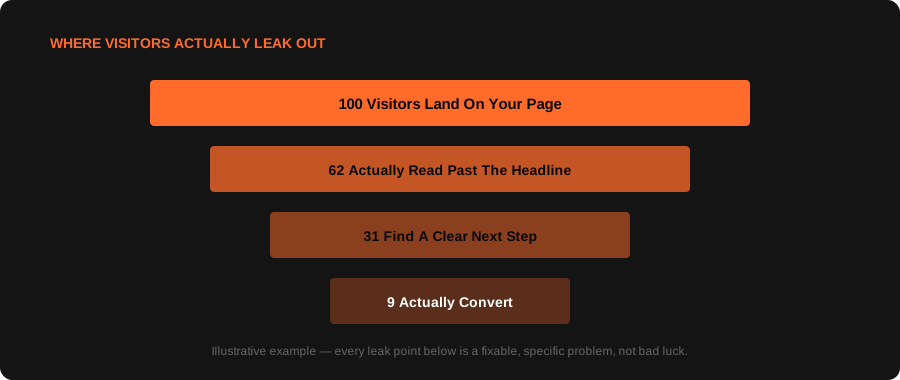
Here are the seven reasons we see most often, and what actually fixes each one.
1You're Getting The Wrong Traffic
Not all visitors are equal. If your ads or content are attracting people who aren't actually your buyer, no amount of page optimization will convert them — they were never going to buy in the first place. Before touching the page, it's worth confirming the traffic itself is qualified. If you're running paid ads, this is exactly where a properly built performance marketing strategy earns its keep — targeting the right person matters as much as the page they land on.
2Your Call-To-Action Isn't Clear
If a visitor has to think about what you want them to do next, most won't bother figuring it out. One clear, visible action — not three competing buttons, not a call-to-action buried below three paragraphs of text — is almost always the better choice.
3Your Page Takes Too Long To Load
Every extra second of load time measurably increases the number of people who leave before the page even finishes rendering, especially on mobile. This is one of the most common — and most overlooked — silent conversion killers.
4You're Asking For Too Much, Too Soon
A ten-field form for someone who just clicked an ad thirty seconds ago is a lot to ask. Every additional field is another moment for someone to decide it's not worth finishing. Ask for the minimum you genuinely need to start the conversation — you can get the rest later.
5There's No Trust Signal On The Page
People don't hand over money or contact information to a business that feels anonymous. A review, a real result, a recognizable proof point — something that answers "why should I trust this business specifically" — makes a measurable difference. If you don't have this yet, even a small set of real results can carry real weight.
6Your Value Proposition Isn't Obvious In 5 Seconds
Most visitors decide whether to keep reading within the first few seconds. If it's not immediately obvious what you do and why it matters to them specifically, they won't stick around to find out.
7You're Not Actually Mobile-Optimized
Most traffic today is mobile, but a lot of sites are still built and reviewed on a desktop screen, then assumed to "work fine" on mobile without ever being properly tested there. A cramped form, a button that's hard to tap, text that requires zooming — these all quietly bleed conversions on the device most people are actually using.
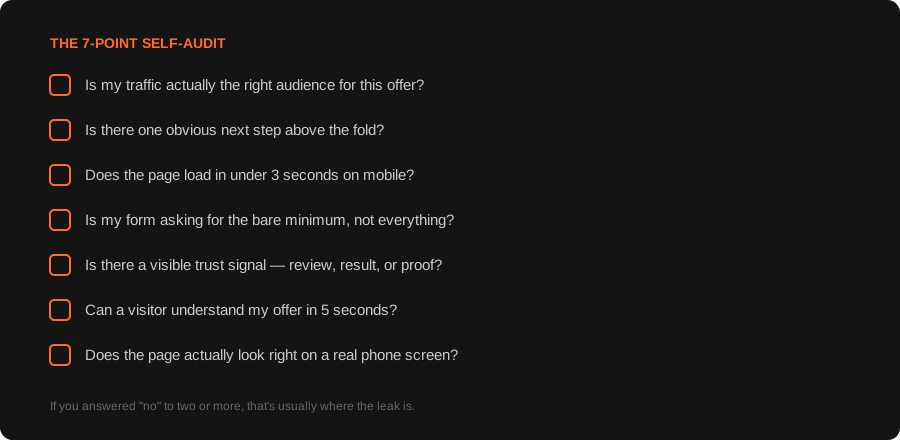
Sending more traffic to a page with a conversion problem doesn't fix the problem — it just means more people experience it.
This is exactly why fixing conversion issues almost always pays for itself faster than simply increasing ad spend. If you've been trying to solve a conversion problem by spending more on Google Ads budget alone, it's worth checking whether the real leak is upstream of the ad account entirely.
Fixing It Properly
A handful of targeted fixes usually outperform a full redesign, but only once you know exactly which of the seven issues above is actually costing you conversions. That's what a proper audit is for — not guessing, checking. Here's how we approach conversion-focused website design, built around fixing exactly this kind of leak.
Frequently asked questions.
It varies significantly by industry and page type, but a general benchmark for a well-optimized lead-generation page is often somewhere between 2% and 5%. What matters more than hitting a universal number is understanding where your specific funnel is leaking.
No, and this is one of the most common mistakes we see. More traffic to a page with a conversion problem just means more people experiencing the same broken funnel. Fix the page first, then scale traffic.
Check your click-through rate versus your conversion rate separately. If people are clicking your ads but bouncing quickly once they land, that's usually a page problem, not a targeting problem.
Often specific, targeted fixes — a clearer call-to-action, a shorter form, a faster load time — move the needle significantly without needing a full rebuild. A proper audit tells you which applies to your situation.
Often within days of a fix going live, assuming you have enough traffic flowing through the page to measure a meaningful change. This is usually much faster than waiting on new content or SEO to kick in.
Let's Find Out Exactly What's Costing You Conversions.
A proper audit tells you which of these seven issues actually applies to your site — not a guess, a diagnosis.